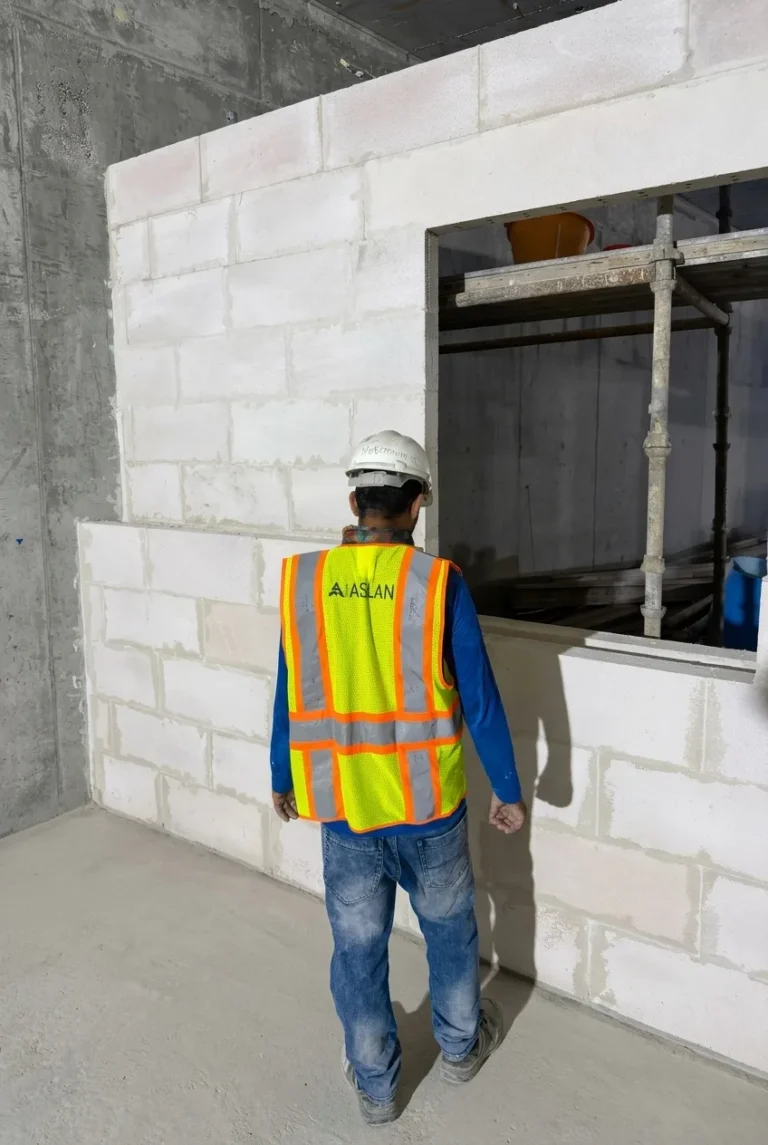
By Eng. Qasem Al-Hariri, ASLAN Contracting & Transportation
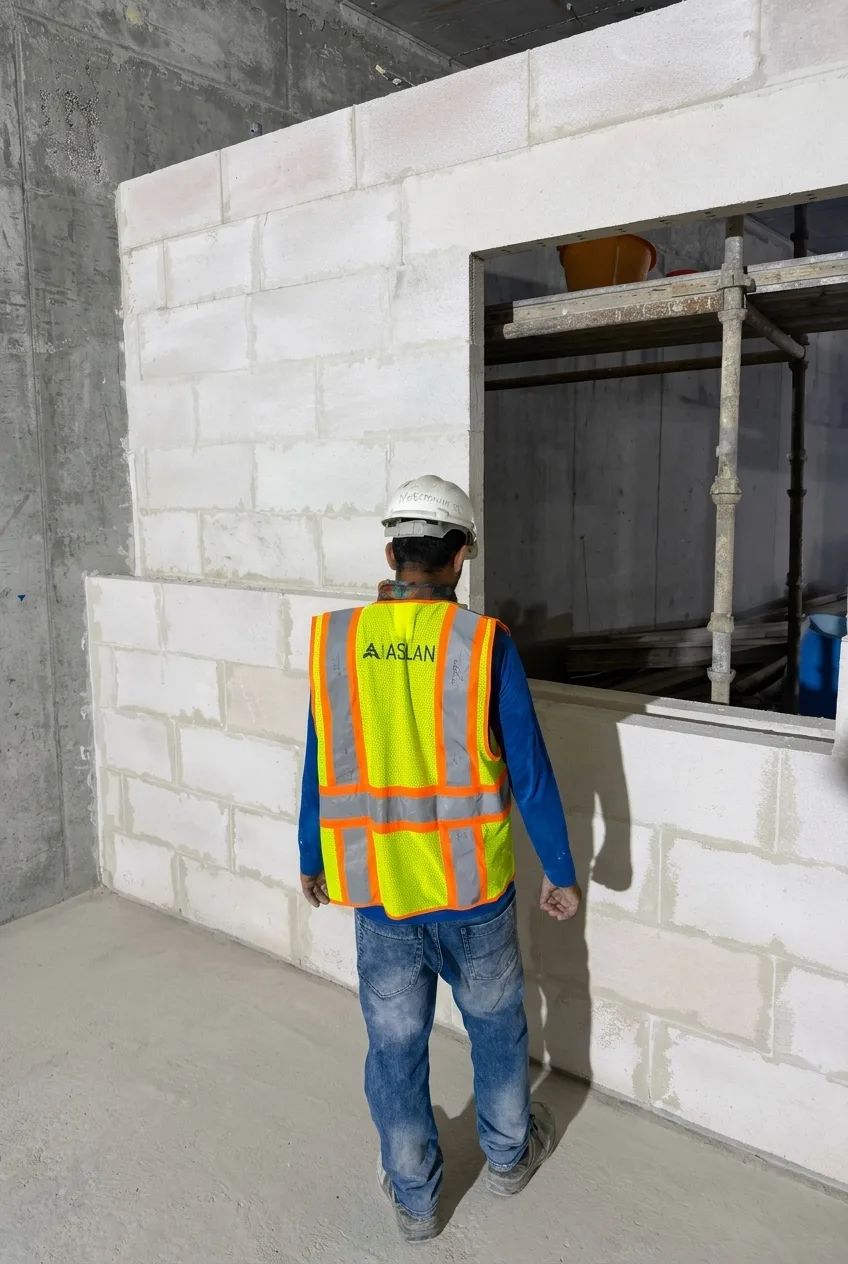
A single layer of AAC (autoclaved aerated concrete) block does work that usually takes two or three materials. In Qatar, a 250 mm AAC wall reaches a U-value of about 0.48 W/m²K, inside the 0.57 limit for external walls, with no insulation board. The block weighs roughly a fifth of a normal concrete block and gives fire resistance of up to 4 hours.
Most of that performance is decided while the wall is being built. Whether it lasts is decided after handover, by owners and maintenance teams who never saw it built. Four problems come up again and again. All four are easy to prevent.
1. A crack where the wall meets the column
The most common complaint on an AAC wall is a fine crack along the line where the blockwork meets a concrete column or beam. The two materials move differently with heat and load, and a Qatari summer moves them a lot.
The crack is rarely structural, but it is the first thing people notice, and it lets moisture reach the render.
- During construction: a strip of mesh embedded in the render across every wall-to-frame joint.
- After handover: check those joints in the first two summers and fill hairline cracks with a flexible filler before repainting. Rigid render will crack again in the same place.
2. Damp at the bottom of the wall, years later
AAC is porous. A wall that stands in water at its base draws moisture upward, and the damage often shows years later as blistering paint, salt marks or loose floor tiles.
- During construction: the first course is laid on conventional mortar over a damp-proof layer, levelled, and only then do the 3–5 mm thin-bed adhesive joints start.
- After handover: if paint fails at floor level, look for the water first: a broken damp-proof layer, a raised outside ground level, or repeated wet cleaning against the wall. Repainting treats the symptom. Finding the water treats the wall.
3. Shelves and water heaters that pull out
This is where most damage after handover starts. Someone mounts a shelf or a water heater with the plugs and screws that work in dense block. In AAC they hold at first, then work loose under load or vibration.
AAC needs fixings made for aerated concrete: longer plugs with wide expansion, helical anchors, or through-bolts with spreader plates for heavy items. The rule is short: anything that carries a person, a tank, equipment or anything that vibrates gets a fixing checked for AAC first.
4. Cable and pipe chases that weaken the wall
Cutting a channel in AAC is easy, and that is the risk. Deep chases, long horizontal runs and chases on both sides of the same wall reduce the part of the wall that carries load and insulates.
AAC walls are not always partitions. Higher-strength AAC is used for load-bearing walls in low-rise buildings, so a wall that looks like a partition may be carrying a floor. Before any chase is cut, confirm what the wall does. Use proper chasing tools, keep chases vertical where possible, and refill them with a repair mortar made for AAC, not ordinary sand-cement.
What to ask for at handover
Most of these problems are avoided with information, not money. Ask your contractor for:
- A plan showing which walls are load-bearing
- The location of the meshed wall-to-frame joints
- A short fixing guide for light, medium and heavy loads
- The correct repair mortar and filler for cracks and chases
Building with AAC in Qatar?
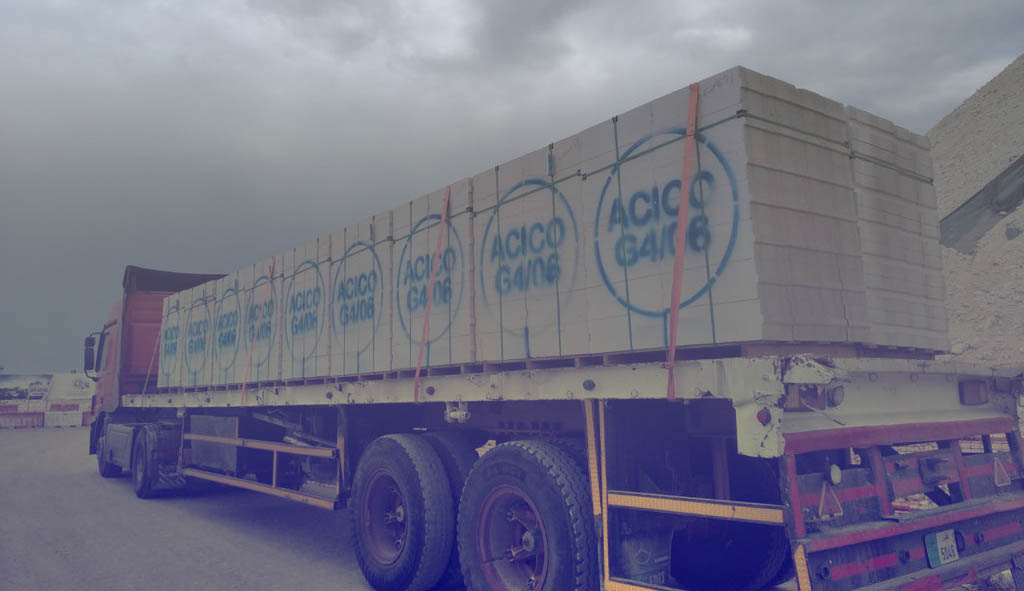
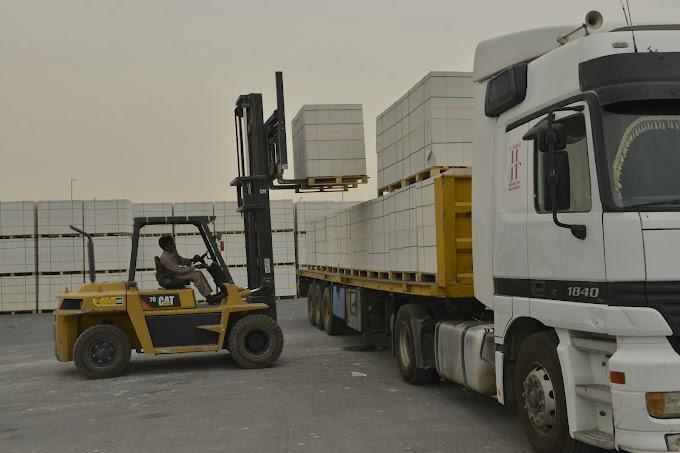
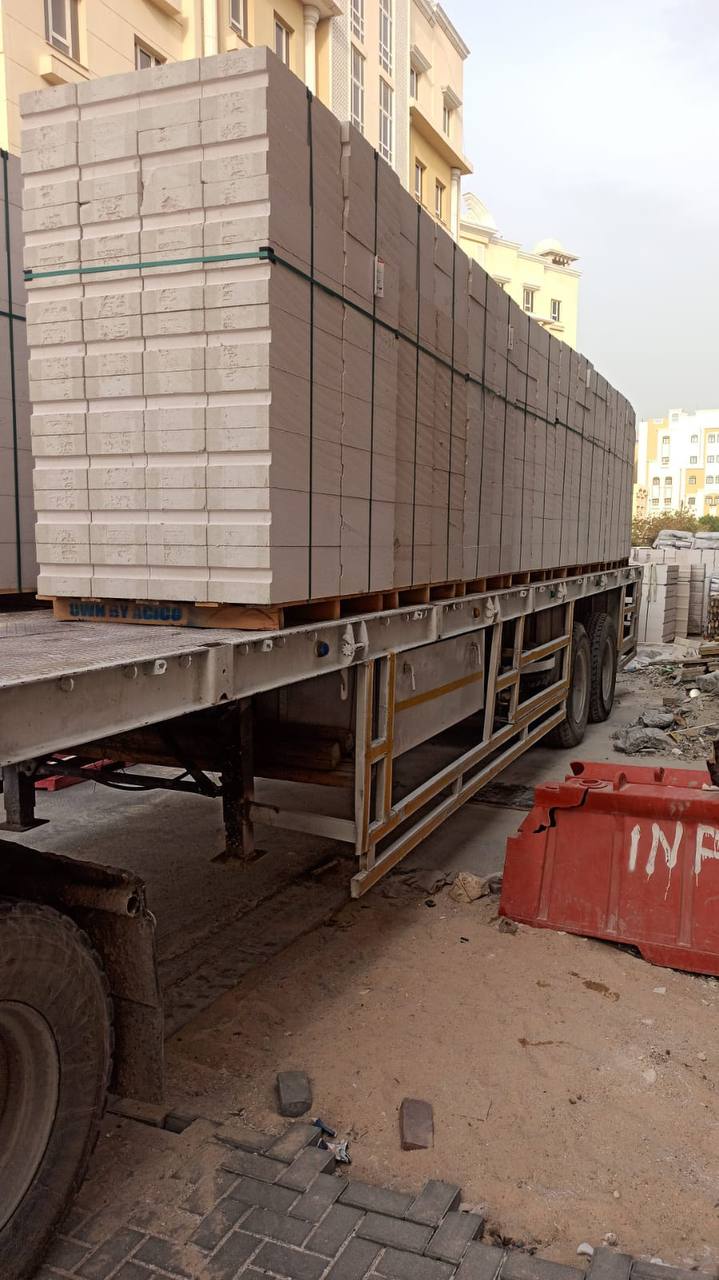
ASLAN supplies and installs AAC blocks in Doha, delivered with our own fleet and installed by our own crews. AAC blocks from an ISO 9001 certified factory, supplied and installed by ISO-certified ASLAN. To estimate quantities, use our AAC block calculator, or send us your drawings on WhatsApp for a quotation.